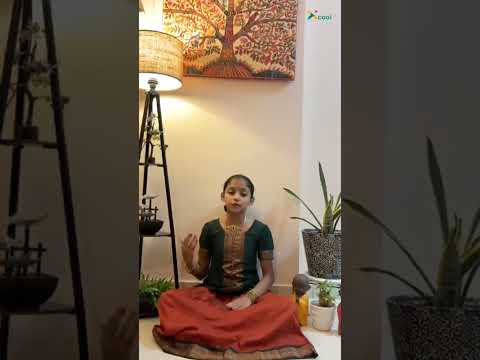
Piano for Trinity Grade 1 by Sumit Kukreja
- Perform three contrasting pieces focusing on phrasing, dynamics, and articulation.
- Learn to interpret and perform pieces with appropriate articulation, dynamics, and phrasing.
- Focus on tempo consistency and stylistic understanding.
- Legato technique for smooth, connected playing.
- Precision and evenness in finger movement.
- F Major, G Major (hands separately, 1 octave).
- D Minor, E Minor (hands separately, 1 octave).
- Begin slowly, focusing on accuracy and finger positioning.
- Gradually increase speed with a metronome while maintaining legato.
- Play short excerpts emphasizing rhythm, pitch accuracy, and dynamics.
- Note and Rest Values: Semibreves, dotted minims, minims, crotchets, and quavers.
- Time Signatures: 2/4, 3/4, 4/4 (common time).
- Notation: Notes in treble and bass clefs (to one leger line above or below).
- Accidentals: Flats, sharps, and naturals.
- Tones and Semitones: Recognize and apply in exercises.
- Key Signatures: C, F, and G Major, including scales, tonic triads, and arpeggios.
- Circle of Fifths: Understanding relationships between C, F, and G Major keys.
- Identify dynamics, tempo changes, and simple rhythms by ear.
- Use slow practice to build accuracy.
- Gradually increase speed using a metronome.
- Incorporate dynamic contrast and musicality.
- Develop finger strength and evenness using Hanon No. 1, focusing on relaxed hand position.
This 18-hour beginner-friendly online course offers one class per week, taught by our most experienced and qualified teachers. Get personalized guidance and start your certification journey with assurance!
1. Repertoire
2. Scales and Technical Work
Focus:
Scales (legato):
Arpeggios: Above-mentioned scales (hands separately, 1 octave).
Chromatic Scale: C Major in contrary motion (legato).
Practice Tips:
3. Sight-Reading
4. Music Theory
5. Aural Skills
6. Practice Tips and Performance Skills
7. Mock Exams
• Simulated exam experience:
✓ Perform three selected pieces.
✓ Demonstrate scales and arpeggios.
✓ Complete sight-reading and aural exercises.
• Feedback and Improvement:
✓ Identify strengths and areas for improvement.
✓ Practice exam timing and stage presence.
- Demonstrate proficiency in performing scales, arpeggios, and technical exercises.
- Accurately perform pieces with appropriate expression, dynamics, and articulation.
- Understand fundamental music theory concepts to analyze and interpret pieces effectively.
Trinity College London
Course Highlights
Features
Expert-designed curriculum
Access to textbook, audio & video resources
Outcome oriented course design
Free demo
Get to know the Teacher
Discuss what you would like to learn
See what they've learned